Best Invisible Hearing Aids
While invisible hearing aids used to be extremely expensive, several new products are priced to meet the needs of cost-conscious first-time buyers.Our expert team selects and tests products rigorously. We may earn commissions if you buy through our links. Here's how we keep reviews independent.
:format(webp))
Invisible hearing aids hide inside your ear canal. Completely-in-canal (CIC) hearing aids sit entirely within the ear canal, leaving only a small pull tab or faceplate visible at the canal opening. Invisible-in-canal (IIC) aids go deeper still, typically out of sight entirely. Expert-reviewed CIC and IIC models include the Phonak Virto Infinio Titanium (IIC) and the Starkey Edge AI CIC, both lab-evaluated and fit across multiple power levels for mild to severe hearing loss.
The 2026 Shortlist
Custom in-ear hearing aid with titanium shell, ERA chip processing, and IP68 durability.
Custom in-ear aid with Sirius chip DNN processing and up to 90 dB fitting range.
Custom aid with G2 Neuro Processor AI, covering mild to severe hearing loss.
Most "invisible" hearing aids will block your ear canal, which can cause your own voice to sound hollow, boomy, or echoey.
Invisible hearing aids are more affordable in 2026 than before: Buyers now have a much wider price range, from custom prescription invisible models costing several thousand dollars per pair to OTC invisible options under $1,000, making them more accessible for first-time, budget-conscious users.
Prescription models still lead on fit, performance, and durability: The top picks stand out because they offer custom fitting, stronger sound processing, better support for more significant hearing loss, and in some cases better durability and AI features.
Invisible hearing aids involve important tradeoffs: Their tiny size makes them discreet, but it also limits battery size, streaming features, and maximum power. They tend to work best for mild to moderate hearing loss, while people wanting Bluetooth streaming, easier handling, or stronger amplification may be better off with larger in-ear or behind-the-ear options.
We tested most products in this guide in HearAdvisor's custom acoustic lab using calibrated speakers and standardized audio recordings.
Our team of expert audiologists at HearingTracker also assess real-world fit, comfort, features, controls, and overall day-to-day usability.
The licensed audiologists on our team also weigh how these devices perform for patients in everyday practice.
Our Recommendations
)
The Phonak Virto Infinio Titanium is a custom invisible-in-canal (IIC) hearing aid with a medical-grade titanium shell 15x stronger than acrylic, IP68 protection, and ERA chip-powered sound processing with AutoSense OS. It suits active wearers with mild to severe hearing loss who prioritize durability and discretion.
- Titanium shell enables a smaller, more deeply seated custom-molded fit
- Durable titanium shell and IP68 rating make this IIC aid suitable for the most active lifestyles
- Three power levels extend invisibility to severe hearing loss
)
The Oticon Own SI IIC is a custom-fitted prescription hearing aid powered by Oticon's Sirius chip with Deep Neural Network processing. It accommodates up to 90 dB hearing loss, carries an IP68 rating, and is battery-powered with a 3–5 day runtime.
- Custom shell molded to the exact shape of the ear canal
- Oticon claims this IIC is truly invisible in 9 out of 10 ears
- No external components; pull string is the only visible element
)
The Starkey Edge AI CIC is a custom completely-in-canal (CIC) hearing aid powered by the G2 Neuro Processor with integrated AI for real-time noise classification and speech enhancement. It covers mild to severe hearing loss and pairs with the My Starkey app.
- One of the smallest aids with Bluetooth streaming
- G2 Neuro Processor classifies soundscapes and enhances speech in real time
- Custom-fit across three power levels for mild to severe loss
Compare the Best Invisible Hearing Aids of 2026
| Product | Top Pick | ||||
|---|---|---|---|---|---|
| Our Rating | N/A | N/A | N/A | N/A | 3.8/5 |
| Verdict | Best Rugged Invisible Hearing Aid | Best Custom-Fitted IIC | Best for AI Sound Processing | Best for Low Maintenance | Best for Quick Professional Fittings |
| Price | $4,598 | $4,598 | $3,198 | — | $3,298 |
| Hands-Free Calling | No | No | Yes | No | No |
| Rechargeable | No | No | No | No | Yes |
| iPhone Streaming | No | Yes | Yes | No | No |
| Android Streaming | No | No | Yes | No | No |
| Telecoil | Yes | No | No | No | No |
)
)
Prices and availability are subject to change. We independently review each item we recommend and appreciate your trust and support. When you buy through our links, we may earn a commission.
While hearing aid stigma has certainly lessened in recent years—especially as Bluetooth earbuds have become popular with consumers of all ages—there’s still healthy demand for invisible hearing aids. In the last 12 months alone, I’ve fit hundreds of invisible hearing aids. Below are the devices that consistently exceed my (and my patients’) expectations, making them my top picks for invisible hearing aids in 2026.

Best Rugged: Phonak Virto Infinio Titanium
The Phonak Virto Infinio is the only IIC available with a fully-custom titanium outer shell, which Phonak claims is 15x stronger than acrylic. The titanium shell is also thinner than acrylic, allowing for a smaller hearing aid that is more rugged than competing IICs.
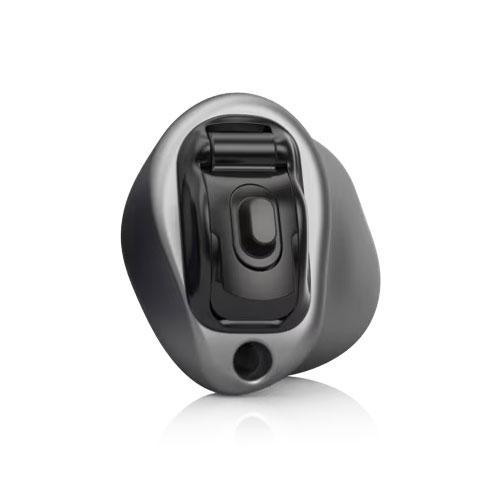
The Phonak Virto Infinio Titanium is a custom invisible-in-canal (IIC) hearing aid with a medical-grade titanium shell 15x stronger than acrylic, IP68 protection, and ERA chip-powered sound processing with AutoSense OS. It suits active wearers with mild to severe hearing loss who prioritize durability and discretion.


In terms of power, Virto Infinio can accommodate a wide range of hearing losses, handling higher frequency hearing loss down to 100 decibels. And AutoSense 6.0 enables automatic adaptation to different listening environments, making it easier for my patients to go through their everyday lives.
While Virto Infinio lacks a smartphone app for adjustments, it features a customizable button for accessing different listening programs and controlling volume.
Pros
- Durable Design
- The titanium variant offers exceptional durability, being 15 times stronger than its acrylic counterparts. Virto Infinio IIC is also IP68 rated.
- Discreet
- The use of titanium allows for a smaller and more discreet design.
- AutoSense 6.0 Technology
- This feature adapts to different listening situations automatically, optimizing the sound experience.
- Flexible controls
- Optional push button or magnetic wand for controlling volume and listening programs.
- Suitability for Various Hearing Loss Levels
- The Phonak Virto Infinio comes in three different power levels: moderate, power and superpower.
Cons
- Limited User Adjustability
- While it has a customizable button for different programs, it lacks a user-friendly app for adjustments.
- Potential Cost
- As a custom-made, professionally-fitted hearing aid, the Phonak Virto Infinio may fall within a higher price range compared to some other hearing aids.
- Potential Feedback
- Sound output may be limited by acoustic feedback, which would limit Virto Infinio's maximum volume.
Best Custom-Fitted: Oticon Own SI IIC
The Oticon Own SI IIC is a custom-fitted, invisible-in-canal acrylic hearing aid that provides a precise, secure fit tailored to the user’s ear. Designed in Denmark, Oticon utilizes Deep Neural Network (DNN) technology to automatically adapt to various sound environments. Employed in both its Polaris (Own) and Sirius (SI) chip, Own’s DNN was trained on millions of real-life sounds. And, internal Oticon research showed that users found Own’s sound superior to devices from two close competitors.

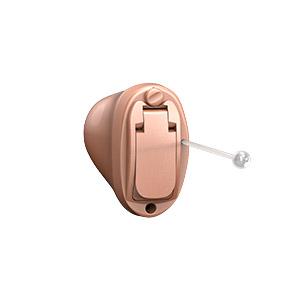
The Oticon Own SI IIC is a custom-fitted prescription hearing aid powered by Oticon's Sirius chip with Deep Neural Network processing. It accommodates up to 90 dB hearing loss, carries an IP68 rating, and is battery-powered with a 3–5 day runtime.
Key Features
Available in two different power levels, Own caters to individuals with up to 90 decibel hearing loss. Though it doesn’t feature user-adjustable settings, adjustments can be made by an audiologist to fine-tune the hearing aid’s performance.
While Oticon recently released the Oticon Zeal, an instant-fit CIC-like hearing aid that features AI-driven speech-in-noise enhancement, supports Auracast, and tested favorably in the HearingTracker and HearAdvisor labs, we still favor the Own for being more discreet.
Pros
- Invisible Fit
- Oticon claims that 9 out of 10 of its IICs are "truly invisible".
- Robust Design
- IP68 ingress-protection rating for moisture and dust particles.
- Superior Sound Quality
- Oticon user research shows a preference for Oticon Own's sound vs select competing devices.
- Suitability for Various Hearing Loss Levels
- With two different power levels, the Oticon Own SI IIC can accommodate individuals with up to a 90 decibel hearing loss.
Cons
- Limited User Adjustability
- Adjustments to the hearing aid's settings need to be done by an audiologist, as it doesn't provide user-adjustable settings.
- Potential Cost
- The Oticon Own IIC, being a custom-made hearing aid, might be priced higher compared to other hearing aids.
- Potential Feedback
- Sound output may be limited by acoustic feedback, which would limit Own's maximum volume.
Best AI Features: Starkey Edge AI CIC
Starkey is known for its custom hearing aids, and the Edge AI line offers the company's latest innovative AI technology. The Edge AI CIC is available in three different technology levels (24, 20, and 16) and three power levels to provide an option for those with more severe hearing loss.


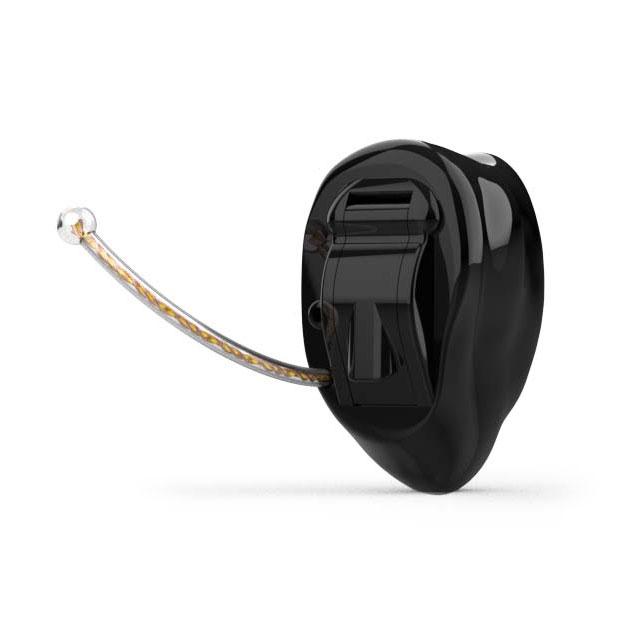
The Starkey Edge AI CIC is a custom completely-in-canal (CIC) hearing aid powered by the G2 Neuro Processor with integrated AI for real-time noise classification and speech enhancement. It covers mild to severe hearing loss and pairs with the My Starkey app.
The CIC uses a 312 battery and can be adjusted only via the app, but user adjustments are limited as settings need to be fine-tuned by an audiologist. This is one of the tiniest hearing aids on the market with audio streaming for both Apple and Android (versions 13 or later), and it also offers health monitoring tech with its embedded sensors and AI.
Starkey also offers an even smaller non-wireless IIC in its Signature Series product family. Although smaller than the Edge AI CIC, it is not rechargeable and doesn't offer the same wireless capabilities or the same AI processing power.

Pros
- AI Sound Optimization
- Starkey's DNN and advanced processing tech offer the potential to make listening clearer and easier.
- Discreet Design with Audio Streaming
- One of the smallest hearing aids available that offers wireless connectivity.
- Robust Design
- IP68 ingress-protection rating for moisture and dust particles.
- Multiple Power Levels
- Potential to meet the needs of those with more severe hearing loss.
Cons
- Potential Cost
- The Starkey Edge AI CIC, being a custom-made hearing aid, might be priced higher compared to other hearing aids.
Low Maintenance: Phonak Lyric 4
Lyric is a unique hearing aid, often referred to as the "contact lens of the ear." Lyric is inserted by an audiologist or ENT close to the eardrum where it is worn continuously for two to three months.
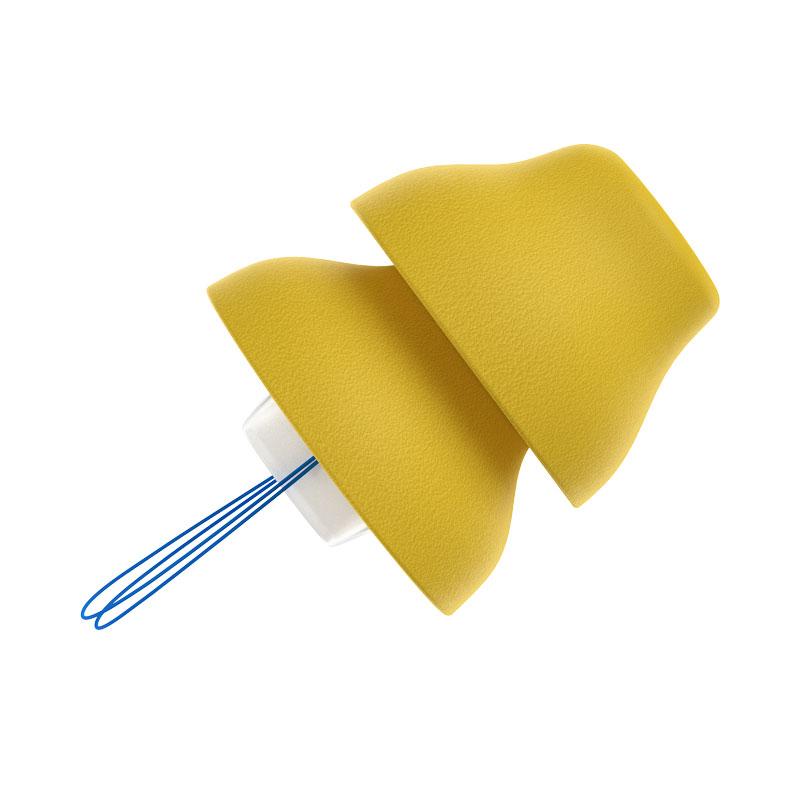
The Phonak Lyric 4 is a 100% invisible IIC inserted deep in the ear canal by a specialist and worn continuously for months without removal, including during sleep and showering. Analog processing delivers natural sound for people with mild to moderate hearing loss.
Ideal for


You don't need to charge or replace the batteries, and there's no need to remove Lyric when sleeping or having a shower. However, when the batteries do run down, you'll need to have your Lyrics replaced at your provider's office (replacements are covered under an annual subscription). If your provider gives you the okay, you may now be able to self-replace these aids at least some of the time.
Lyric comes in seven sizes, catering to various ear canal shapes and sizes, and its soft biocompatible material ensures comfort during extended use.
Pros
- Most Invisible
- Phonak Lyric is the most invisible hearing aid on the market.
- Extended Wear
- Its unique design allows it to be worn 24/7, during various activities including showering, exercising, or sleeping.
- Easy to Manage
- If you have any vision or manual dexterity issues, Lyric is a truly hassle-free option.
- Natural Sound Quality
- Using analog processing technology, it aims to provide a sound experience that closely resembles natural hearing.
- Comfortable Fit
- Available in seven sizes and made of soft biocompatible material, it offers comfort during extended use and ensures the ear can breathe.
- Adjustability
- Limited adjustments (volume control, sleep mode) are available using the SoundLync accessory.
Cons
- Professional Assistance Required
- The Phonak Lyric must be inserted and replaced by a specialist audiologist every few months.
- Annual Subscription
- Unlike some other hearing aids, the Phonak Lyric does not have user-replaceable batteries. The entire device is replaced when the battery depletes.
- Not For Everyone
- To wear Lyric, you'll need to have adequately sized and shaped ear canals, no ear-related medical conditions, and limited earwax production. View our Lyric 4 page for more details.
Quick Professional Fittings: Signia Silk IX
The Signia Silk IX is a completely-in-canal (CIC) hearing aid designed to provide a quick and comfortable fit. Using a range of "click sleeves," the device can typically can be fitted in a single office visit.
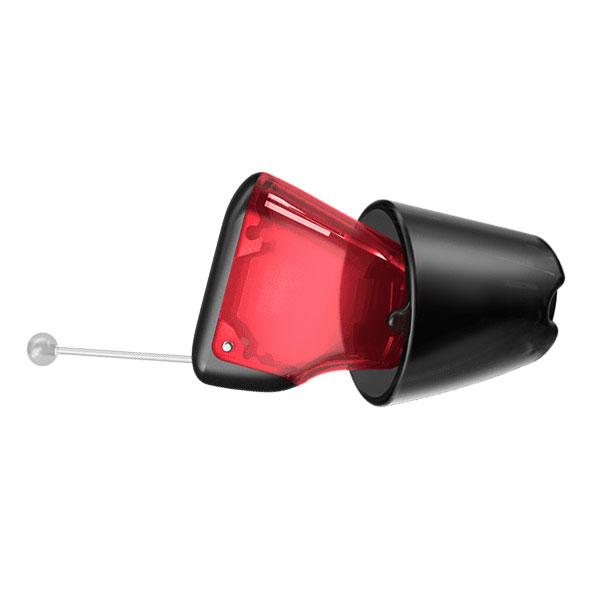
The Signia Silk Charge&Go IX is a prescription instant-fit CIC hearing aid with up to 28 hours of rechargeable battery life, Binaural OneMic Directionality, and app-based wireless control. It fits most patients in a single visit and suits mild to moderate hearing loss.
Expert Review

Silk IX offers unique features like ear-to-ear communication and Binaural OneMic Directionality 2.0 for improved sound directionality and speech understanding in complex listening situations.
Pros
- Instant Fit
- The Signia Silk X doesn't require traditional earmold or ear scan procedures for fitting. This means the hearing aids can typically be fit in a single office visit, making it a convenient choice for many users.
- Rechargeability and all-day battery life
- Up to 28 hours of runtime and 24 hours on a 3-hour charge, with a charging case that holds 4 extra charges.
- Ear-to-Ear Communication
- Hearing aids work together as a system, improving the directionality of sound and enhancing speech understanding in noisy environments, according to Signia.
- Remote Control Options
- The Signia Silk X offers remote control via the miniPocket™ and Signia App, providing easy access to adjustments.
Cons
- No Audio Streaming
- Like all the other products reviewed in this article, there's no wireless audio streaming with these hearing aids.
- Not For Everyone
- If you have small or windy ear canals, or produce a lot of wax, these hearing aids aren't for you.
- No onboard buttons
- Signia Silk IX is fully automatic and app-controlled, but due to its small size does not have buttons/switches on the aid itself.
Invisible Hearing Aids: A Few Key Differences
Hearing Aid | Type | Waterproofing | Controls |
|---|---|---|---|
Virto Infinio IIC | Custom-fit | IP68 | Push button or magnetic wand |
Own IIC | Custom-fit | IP68 | None |
Edge AI CIC | Custom-fit | IP68 | App and push button |
Lyric | Extended-wear | Not rated | SoundLync |
Silk IX | Instant-fit | Not rated | App |
How much do invisible hearing aids cost?
In 2026, there’s a broader range of products and prices than ever before. While invisible hearing aids used to be extremely expensive, several new products are priced to meet the needs of cost-conscious first-time buyers.
How much do CIC or IIC hearing aids cost on average?
On the higher end, you can spend $5,000 or more for a pair of high-performance invisible in-the-ear (CIC or IIC) prescription hearing aids programmed to your specific hearing loss and customized to the exact size and shape of your ear canals.
How much do OTC invisible hearing aids cost?
Thanks to the new crop of over-the-counter (OTC) hearing aids, you can purchase nearly-invisible hearing aids that fit completely within your ear canals for under $1,000.
Invisible-in-the-Canal (IIC) vs. Completely-in-the-Canal (CIC) Hearing Aids
Invisible hearing aids are smaller than the Bluetooth earbuds that people wear at the gym. You can buy excellent hearing aids in earbud form factors at a broad range of prices and performance levels, but you will need a much smaller form factor if want hearing aids that can’t be seen.


We consider two form factors as “invisible:”
- A hearing aid with an “invisible in-the-canal” (IIC) form factor sits so deeply within the ear canal that it’s nearly impossible to see.
- A second, slightly larger form factor sits “completely in the canal” (CIC) and is nearly invisible but can be seen if someone is looking straight into your ear.
:format(webp))
CIC vs. IIC Invisible Hearing Aids
CIC (Completely-in-Canal) | IIC (Invisible-in-Canal) | |
|---|---|---|
Position in ear canal | Sits at the canal opening | Sits deeper in the ear canal |
Visibility | Nearly invisible; faceplate may show on direct inspection | Invisible in ~9 out of 10 wearers (per Oticon) |
Size | Slightly larger than IIC | Smallest custom hearing aid style |
Hearing loss range | Mild to severe (power versions available) | Mild to moderately severe; feedback limits max output |
Bluetooth streaming | Available in select models | Rarely available due to size constraints |
Battery | Disposable (312) or rechargeable options | Disposable (10A) or extended-wear; shorter runtime |
Custom fit required? | Most models; instant-fit options exist | Yes, custom earmold impression standard |
Custom Prescription vs. Self-Fit Invisible Hearing Aids
There’s another difference to be aware of, and it can have a big impact on price. Custom invisible hearing aids are programmed by a healthcare professional to your specific hearing loss, whereas invisible over-the-counter (OTC) hearing aids generally require you to adjust volume and program settings yourself.

Custom-programmed prescription hearing aids can help you hear a lot better, especially if you have more than very mild hearing loss. And many custom models are manufactured to match the specific shape of your ear canal based on an earmold impression taken by your provider, which can make them more comfortable. But you pay a premium, with custom models from leading manufacturers costing several thousand dollars each.
OTC hearing aids, on the other hand, are one size fits all and generally aren’t sold or serviced by audiologists. They don’t provide exact tuning to your hearing-loss prescription, instead allowing you to adjust some amplification and sound processing settings yourself. But they can perform well, especially for people with mild hearing loss. And you can get a pair of invisible OTC hearing aids for less than $1,000.
:format(webp))
If you’re shopping for invisible hearing aids, get to know those acronyms and decide which may be right for you. IIC’s are so tiny no one will ever see them, but the larger CIC’s can barely be seen and in many cases are more affordable. We recommend trying out both form factors.
How well do invisible hearing aids work?
Because they are so small, invisible hearing aids can’t provide as many bells and whistles as larger hearing aids with processors that sit behind the ear. But they can still provide excellent amplification with advanced sound-processing features. In fact, recent product introductions from the largest hearing-aid manufacturers have integrated their latest chip technologies and sound processing upgrades into their smallest hearing aids.


But there are tradeoffs. While invisible hearing aids provide plenty of amplification for people with mild or moderate hearing loss, they work less well for more severe hearing loss. While there are some high-output models on the market today offered by companies like Phonak, Oticon, and Starkey, acoustic feedback is likely to limit amplification well before the maximum output is reached. This is due to the close proximity of speaker output and microphone.
Battery life is also an issue: smaller batteries need to be changed or recharged more often than many hearing aid users would like. And while many of today’s custom and OTC hearing aids that sit behind the ear provide Bluetooth streaming of phone calls and other audio, invisible hearing aids are too small to include the wireless circuitry required for audio streaming (with one notable exception).
Are invisible hearing aids for you?
If you discover your hearing loss is not mild or moderate but severe, you may not benefit fully from invisible hearing aids. And, if you want to stream audio and phone calls, or want long-lasting rechargeability, you’ll need to look at larger in-ear or behind-the-ear hearing aids. Lastly, one of the major downsides of any in-ear hearing aid is comfort and occlusion (own voice boominess, etc).
Other Discreet Hearing Aid Options
If discretion is the most important thing for you, don’t write off behind-the-ear hearing aids without having a look at some of the new discreet models currently available. Receiver-in-canal (RIC), in particular, are known to be the most discreet type of behind-the-ear hearing aids—they feature very small microphones and sound processors, with near-invisible wires that run down to a speaker that sits well within the ear canal. Be sure to check out our best of hearing for 2026 before settling on the in-ear invisible models.
July 21, 2026: The Eargo 8 was removed because its parent company, LXE Hearing, is winding down U.S. operations.
)
Abram Bailey, AuD
Founder and PresidentDr. Bailey is a leading expert on consumer technology in the audiology industry. He is a staunch advocate for patient-centered hearing care and audiological best practices, and welcomes any technological innovation that improves access to quality hearing outcomes. Dr. Bailey holds an Au.D. from Vanderbilt University Medical Center.
)
Matthew Allsop
AudiologistMatthew Allsop is the Video Content Manager at HearingTracker. He has nearly two decades' experience in audiology, and has practiced in both the NHS and the private sector. He is accepting new patients at Harley Street Hearing in London.